What is OCD
Essential features of OCD (Obsessive Compulsive Disorder) are the repeated occurrence of obsessions and/or compulsions of sufficient severity that they are time-consuming (> 1 hour per day) or cause marked distress or impairment[1]. In simple language, few people get over taken by certain uncontrollable thoughts (obsessions), which are at times accompanied by self-invented rituals(compulsions) . When these obsessions and/or compulsions taken more than 1 hour per day, then a person is said to be suffering from OCD (Obsessive Compulsive Disorder). The most common OCD obsessions and compulsions are given below [2]
| Obsession | Compulsion |
| Fear of Contamination (50%) | Washing/cleaning (50%) |
| Need for symmetry/precision (32%) | Symmetry/precision (28%) |
| Pathologic Doubt (42%) | Checking (61%) |
| Religious/Blasphemy (10%) [3] |
Approximately half to three-quarters of individuals with OCD have multiple obsessions. [4] That is why they don’t add up to 100 percent.
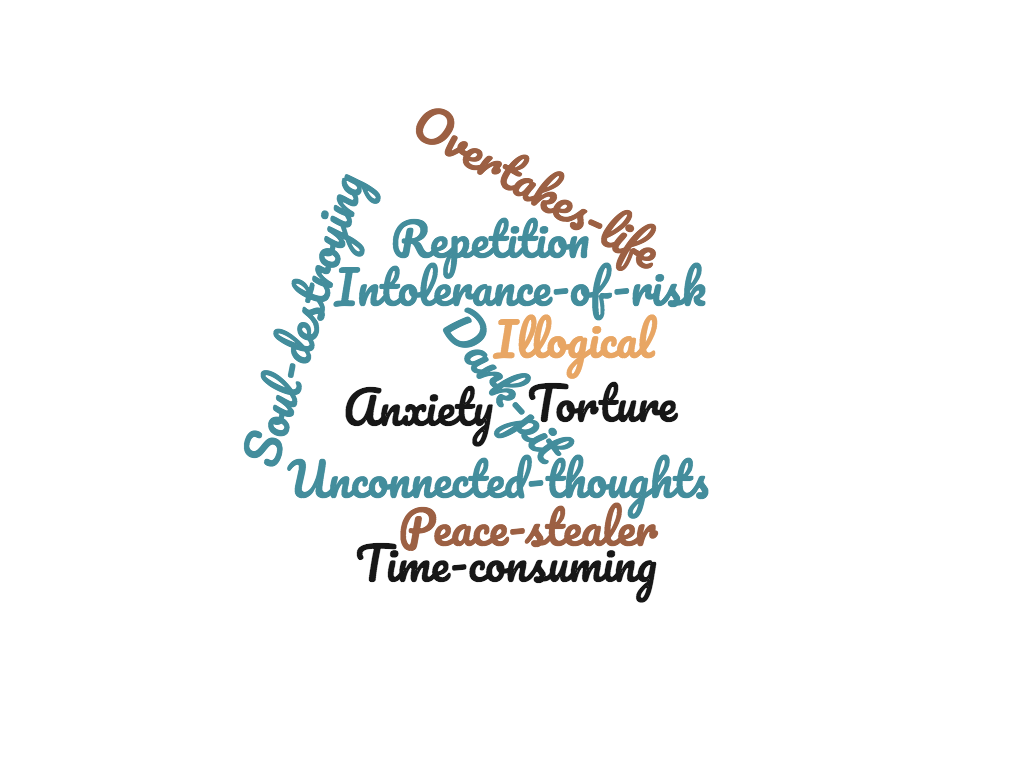
People who suffer from OCD often describe it using following words:
References
Section titled “References”- DSM-IV-TR; APA, 2000
- OCD Symptom Subtypes described by Ramussen and Eisen (1998)
- A survey done in an area with practicing religionists would yield a much larger percentage, especially, when fear of contamination gets attached to the religious incorrectness obsession.
- Akhtar et al., 1975; Ramussen and Eisen. 1998